Best light for a 20 gallon planted tank
Three options across budget tiers, compared on the specs that actually affect plant growth and algae risk — not just brightness on the box.
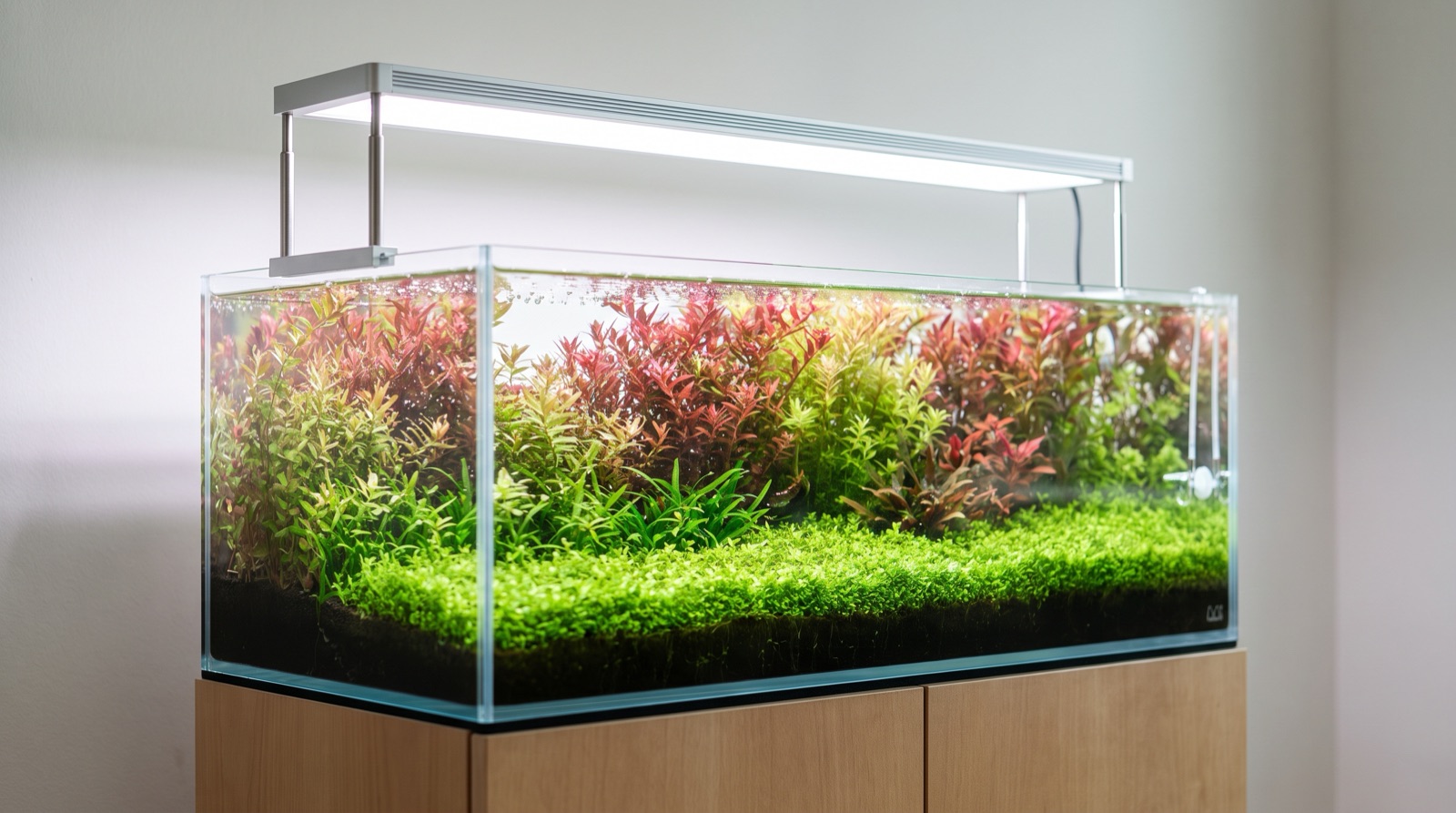
Direct answer: for most 20-gallon planted tanks without CO2, a fixed full-spectrum light in the 30–36W range is enough. Reach for a tunable RGB fixture only if you're running CO2 or growing demanding stem plants that need precise spectrum control.
Sample Brand Placeholder Light A (RGB Planted)
Highest usable PAR for demanding stem plants, with a schedule you can actually dial in.
See current priceSample Brand Placeholder Light B (Budget Full-Spectrum)
Enough light for easy, low-tech plants at the lowest cost of entry in this comparison.
See current priceFull comparison
| Product | Wattage | Recommended tank | Plant growth | Algae risk | Value | |
|---|---|---|---|---|---|---|
| Sample Brand Placeholder Light A (RGB Planted) | 45W | 20-29 gallon planted | 5/5 | medium | 4/5 | View |
| Sample Brand Placeholder Light B (Budget Full-Spectrum) | 30W | 10-20 gallon low-tech | 3/5 | low | 5/5 | View |
| Sample Brand Placeholder Light C (Mid-Range Balanced) | 36W | 15-25 gallon planted | 4/5 | medium | 4/5 | View |
Specifications shown are placeholder values for design validation — pending Phase 1 manufacturer-source verification before publication.
Why this recommendation works
Plant growth depends on usable PAR reaching the substrate, not on wattage printed on the box. The overall pick delivers enough intensity for high-light stem plants without pushing so much light that nutrients and CO2 can't keep pace — the most common cause of algae in new planted tanks. The budget pick trades spectrum tuning for a lower price, which is the right trade for low-tech tanks running easy plants.
Alternatives
If you're running pressurized CO2 and chasing red stem plants specifically, it's worth stepping up to a higher-PAR fixture beyond this comparison — we'll cover that tier in a dedicated CO2-tank lighting guide.
Common mistakes
- Buying based on wattage alone instead of PAR at your substrate depth.
- Running 10+ hour photoperiods to "help plants grow faster" — this mostly feeds algae.
- Choosing a premium RGB fixture for a low-tech tank that will never use the tunable spectrum.
- Ignoring tank length and picking a fixture that leaves the ends of the tank dark.
Frequently asked questions
How many hours a day should a planted tank light run?
Most low-to-medium light planted tanks do well with 6-8 hours a day. Longer photoperiods without added CO2 or nutrients tend to feed algae faster than plants.
Do I need a full-spectrum RGB light for a beginner planted tank?
No. A fixed full-spectrum white light is enough for low-tech setups with easy plants. RGB tuning mainly helps once you are chasing specific stem-plant coloration or running CO2.
Will a brighter light make my plants grow faster?
Only up to a point, and only if nutrients and CO2 keep pace. Excess light without matching nutrients is the single most common cause of algae outbreaks in new planted tanks.
Sources
- ManufacturerManufacturer spec sheet — sample placeholder AAccessed Aug 1, 2026
- ManufacturerManufacturer spec sheet — sample placeholder BAccessed Aug 1, 2026
- ManufacturerManufacturer spec sheet — sample placeholder CAccessed Aug 1, 2026